Polyphenols: Metabolism, Cellular Signals, and Human Data
Polyphenols are a diverse group of plant compounds, not a single antioxidant drug. This overview explains their metabolism and microbiota, Nrf2 and the limits of cellular mechanisms, and research on vascular health, cocoa, berries, and resveratrol. We specifically address negative clinical outcomes, risks of concentrated catechins, and practical dietary choices.
Updated: . An update is not evidence of expert review.
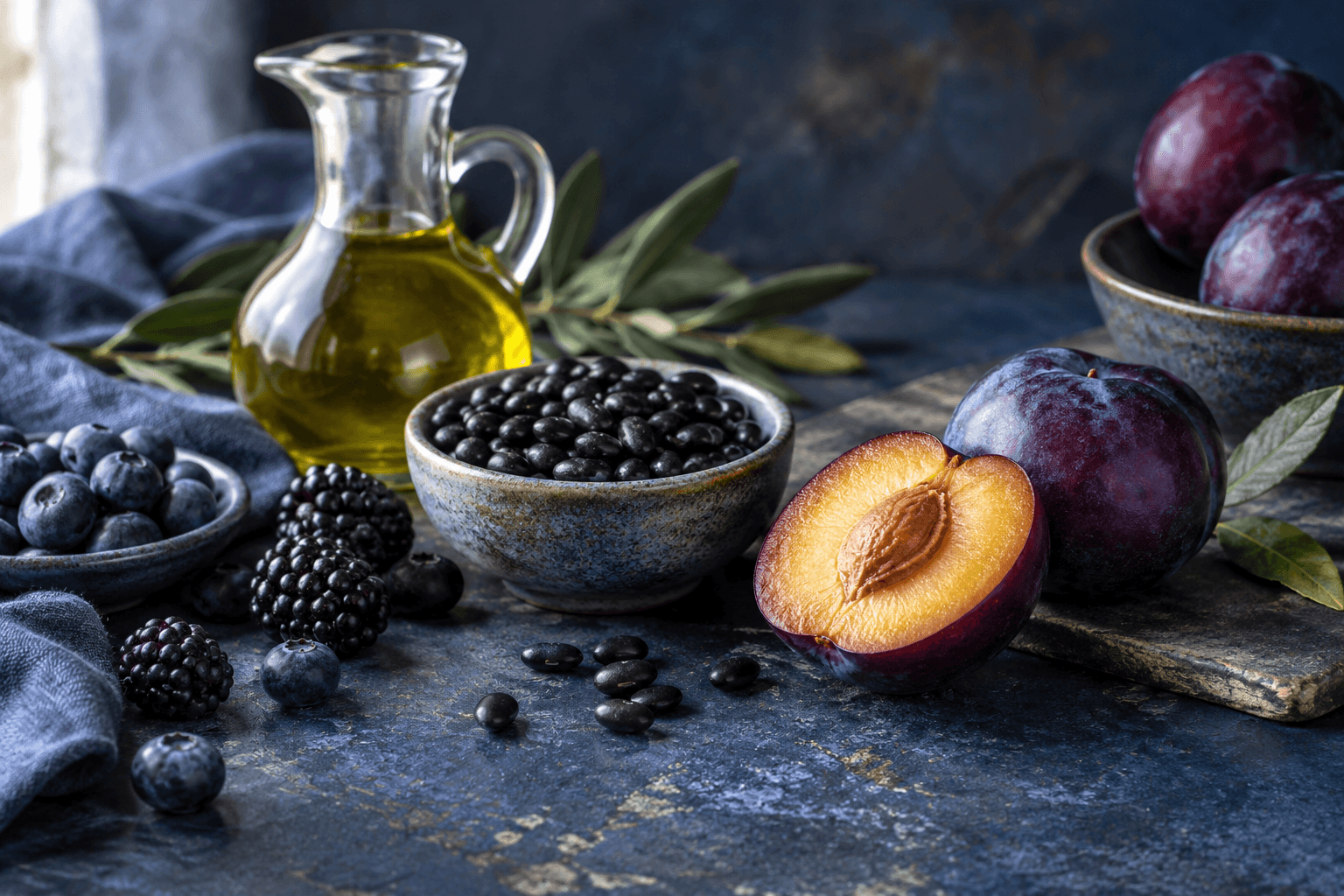
Dark berries, tea, cocoa, and olive oil are often grouped together under the umbrella term "antioxidants." Behind this word lies a diverse group of plant substances known as polyphenols, which differ in their structure, metabolism in the body, and studied effects. Their presence helps explain the interest in these products, but it does not make food a cure for aging. To understand the topic, one must trace the path from a plant molecule to a human study without losing sight of dosage, form, and the final outcome.
For daily nutrition, the product itself is what matters, while for scientific interpretation, it is crucial to know which compound was studied and in what quantity. Berries contain fiber and other components, oil provides fat, and extracts are capable of delivering a concentration unattainable in a regular serving. Therefore, data on polyphenols is simultaneously interesting and easily becomes a source of exaggeration. Below, we will break down their metabolism, cellular signaling, vascular and cognitive results, and then return to practical food choices and the safety of supplements.
Polyphenols: A Large Family, Not a Single Active Ingredient

Polyphenols are a broad group of plant-derived compounds with phenolic structural elements. Among them, flavonoids, phenolic acids, stilbenes, lignans, and other classes are distinguished. The names describe the chemical structure but do not define a single clinical function. Anthocyanins in berries, catechins in tea, and resveratrol cannot be considered interchangeable doses of the same substance.
Flavonoids are also heterogeneous. Quercetin belongs to flavonols, epicatechin to flavanols, and anthocyanins form a separate group associated with the coloring of many berries. Similar names are easy to confuse, especially in promotional copy: "flavanols" and "flavonols" do not denote the same thing. To read a study, one needs to know the specific formula, not just a broad label of "rich in polyphenols."
In the plant, these compounds are involved in protection, coloration, interaction with the environment, and other processes. Their content varies depending on the variety, ripeness, storage, and processing. Therefore, two visually similar portions can deliver different amounts of individual molecules. The value of a diverse plant-based diet does not require the exact replication of one batch's chemical profile, but dose comparison in research requires exactly such certainty.
The food matrix—the structure of the product and the combination of its components—influences the uptake of substances. A molecule in a whole berry, a beverage, and a capsule ends up in different conditions. At the same time, the speed of consumption, the portion size, energy intake, and the components replaced in the diet all differ. Therefore, a result obtained with a standardized extract cannot be automatically credited to any food with a similar name.
The word "antioxidant" in a chemical experiment usually refers to the ability to participate in a specific redox reaction. Such analysis is performed under defined concentrations, solvents, and conditions. It does not measure how much of the substance will be absorbed, what form will reach the tissue, or whether a disease will be modified. High activity of a sample in a laboratory test is not a ready-made assessment of its medical benefit.
Redox processes themselves are not synonymous with damage. Reactive oxygen species are involved in normal signaling, and the body regulates their formation and elimination. The problem arises when there is an imbalance in a specific context, which cannot be fully described by a single "antioxidant capacity" number. Therefore, the goal of nutrition is not to maximally suppress all such reactions with any available supplement.
Chemical structure helps explain why laboratory reactions are possible. Aromatic rings and hydroxyl groups influence the molecule's interactions with other compounds, but the number of such groups does not determine medical efficacy. In the body, solubility, binding, transformations, and accessibility to the target tissue are also important. Therefore, one cannot build a clinical ranking based on the principle "more phenolic groups equals stronger protection." Between the structure and the observed outcome lies a chain of processes that a researcher must measure or logically connect, and which a consumer cannot replace with one simple, attractive formula.
For the reader, it is more important to understand which questions are being addressed at different levels. Chemical analysis describes the properties of a sample, a cellular experiment describes a possible pathway of action, and a human trial describes the result under selected conditions. Observation in an animal model can help connect these stages, but it does not reproduce all the nuances of human metabolism. This sequence maintains precision without requiring one to perceive every plant molecule as a potential miracle.
A practical assessment begins with a clear name. If a product promises a "polyphenol" effect but does not specify its composition and quantity, comparing it to research is difficult. If the quantity is specified, the question of the measurement method and the form of the substance remains. The total mass of an extract, a cumulative analytical indicator, and the dose of a specific compound are three different characteristics that should not be substituted for one another.
What happens after a meal: absorption and microbiota activity
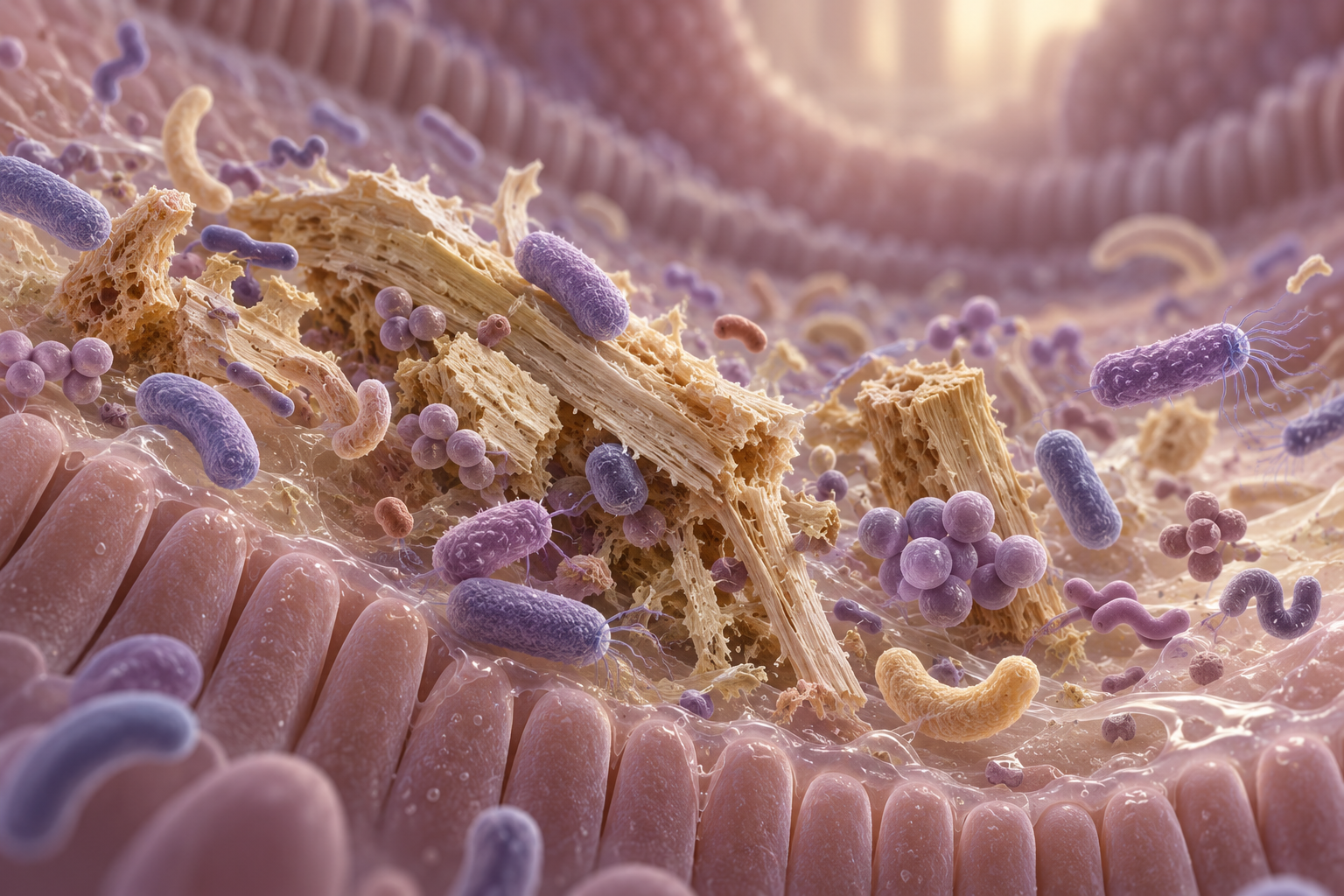
The path of polyphenols in the body is more complex than a simple transfer from the plate to the bloodstream. Some compounds are released from the food matrix, some are transformed in the intestine, and then undergo metabolism in the intestinal wall and liver. Other chemical groups may attach to these molecules, altering their properties. Therefore, tissue often encounters not the original substance from the plant, but its derivatives.
Bioavailability means that a substance or its corresponding form reaches systemic circulation and becomes available for further distribution. However, a high percentage of absorption does not mean that the original molecule circulates unchanged for long. It is necessary to observe metabolite concentrations, their time of appearance, and their excretion separately. The expression "polyphenols are poorly absorbed" is too general for such a large family.
This is well illustrated in a human study by Ottaviani and colleagues using labeled epicatechin. Eight participants received 60 mg of the substance; the researchers tracked its subsequent fate and discovered over twenty metabolites. Estimated absorption was 82 ± 5%, with a significant portion of the transformations linked to the microbiota. The result describes the fate of a specific flavanol, rather than the bioavailability of all polyphenols or the clinical efficacy of a dose.
Among the transformations after absorption are glucuronidation and sulfation — the attachment of the corresponding chemical groups. Such reactions are usually considered part of normal metabolism and preparation for further distribution or excretion. They do not mean that the product necessarily "loses all its benefits": the derivatives can also possess biological properties. But their action must be studied separately because the properties of the original molecule are not automatically preserved. This is precisely why the profile of metabolites with time measurements is important, not just the fact of the substance’s presence in the consumed portion.
The microbiota is capable of processing some of the compounds that reach the colon. As a result, smaller molecules appear, and the metabolite profile depends on the original substance and the microbial environment. This explains the interest in individual differences in response. However, the existence of a microbial stage does not prove that polyphenols automatically increase all desirable bacteria or correct any intestinal condition.
The relationship is bidirectional: microbes change compounds, and food substances can influence the conditions of their existence. Moreover, the human diet simultaneously provides fibers, fats, proteins, and a multitude of other substrates. Isolating the effect of one group of molecules is difficult without a suitable comparison. Therefore, an attractive explanation that they "feed beneficial microbiota" does not replace a measured result of a specific intervention.
For the evaluation of cellular studies, these transformations are fundamental. If cells are treated with a high concentration of original quercetin or epicatechin, one must ask if such a form and concentration are encountered in human tissue after a meal. The Ottaviani study underscores the importance of studying the metabolites actually formed and the differences between species. A cellular mechanism may be correct within an experiment but poorly correspond to the impact of a regular serving.
An animal model adds another layer of uncertainty. Doses can be high relative to body weight, the diet may differ significantly, and the set of metabolites may not match those in humans. Converting milligrams per kilogram does not eliminate all physiological differences. Therefore, an improvement in the condition of mice should be described as a result in mice, rather than as a ready-made piece of advice for a person with a similar diagnosis.
For a specialist, it is useful to distinguish between exposure and effect. Detecting a metabolite in the blood demonstrates uptake and transformation, but not necessarily a beneficial action. A change in microbial composition may be an intermediate link rather than the ultimate goal. In practical work, this helps to choose between research that explains a biological pathway and research that answers a clinical question.
For the user, the meaning is simpler: there is no need to bypass ordinary food for the sake of the highest possible concentration in the blood. A diet is evaluated by several properties, including nutrition, tolerability, and the substitutions it allows. Metabolism explains why responses may vary, but it does not make every difference a reason to purchase a personal microbiome analysis. A convenient habit of eating berries or using an appropriate oil does not require a promise of the same molecular effect in everyone.
Nrf2, hormesis, and the boundaries of mechanistic explanations

Nrf2 is a transcription factor, meaning it is a protein involved in regulating the activity of specific genes. It is linked to the cellular response to chemical and oxidative stresses. Keap1 is involved in controlling Nrf2, and changes in this system can influence the formation of protective enzymes. This is a more complex mechanism than the direct "scavenging of free radicals" by molecules from food.
When researchers speak about the activation of the Nrf2 pathway, they may measure the translocation of the protein into the nucleus, the activity of DNA regulatory sites, or a change in the quantity of specific enzymes. Each indicator reflects a separate stage. None of them, by itself, means an improvement in life expectancy or the prevention of cancer. Such a conclusion would require entirely different studies and clinical outcomes.
The regulatory ARE site in DNA is associated with the response to such signals; the abbreviation stands for Antioxidant Response Element. NQO1 is one of the enzymes whose expression can be assessed when studying this system. In an experiment, a change in its formation helps confirm that the cellular program has indeed responded to the stimulus. However, the enzyme indicator remains an indicator of this program, not a summary assessment of the health of a cell, organ, or person. Understandable names for these stages make the mechanism more precise, but they do not add clinical evidence beyond what has been measured.
In the work by Tanigawa and colleagues, quercetin was studied in HepG2 cells—a laboratory cell line of human tumor origin. Changes in the Nrf2/Keap1 system and the expression of NQO1, one of the associated enzymes, were observed. This is a primary mechanistic in vitro study, not a trial of quercetin in patients. Its value lies in uncovering possible signaling, not in determining a useful human dose.
The word "human" in the name of a cell line is sometimes misleading. The cells are of human origin, but the experiment does not account for absorption, hepatic metabolism, distribution, and the interactions of tissues within a whole organism. Furthermore, a tumor cell line is not identical to the normal tissue of a healthy person. Therefore, translating a result of "activated a gene in cells" into the phrase "protects the liver after a meal" requires missing steps of evidence.
Hormesis refers to a situation where a moderate stimulus causes an adaptive response that differs from the response to a high load. This is a description of a form of dose-response, not a rule that "the more plant substances, the better." For each case, it is necessary to show doses, outcomes, and the adaptive process itself. Mentioning hormesis does not create a safe regimen for taking an extract and does not negate toxicity.
Xenohormesis is the hypothesis that an animal organism can respond to plant signaling compounds associated with the condition of the plant. It helps in formulating research questions, but it is not an established clinical instruction. One cannot conclude from it that any bitter extract triggers a longevity program in a human. In a full explanation, the degree of uncertainty should remain next to such a term.
It is also important that the activation of a protective pathway is not always unambiguously beneficial in every state. Biology depends on tissue, duration, and context, and diseases can change the significance of a signal. Therefore, the consumer's goal should not become the maximum increase of Nrf2 based on a marketing promise. It is a research target that cannot be reduced to a home-based metric of good nutrition.
When a physiological mechanism is explained to the reader, it is useful to trace the causal chain. First, the substance must be delivered in an appropriate form, then interact with the target, after which the change must influence a function and a meaningful outcome. If a study confirms only one step, the others remain hypotheses. Such precision does not diminish interest in the mechanism: it shows exactly what has been discovered and what remains to be clarified.
In practice, the names Nrf2, AMPK, or other pathways do not help in choosing between ordinary berries and a concentrated supplement without a clinical context. They may explain the research interest, but they do not replace data on benefits and risks. For a nutritional decision, form, serving size, tolerability, and the product's role in the diet are more important. For a medical decision, studies corresponding to the specific person's condition are additionally required.
Vessels and lipids: from a measured indicator to a clinical outcome

The endothelium is the inner layer of the vascular wall, involved in the regulation of vascular tone and other processes. One of the research indicators is flow-mediated dilation: a change in artery diameter in response to increased blood flow. This is a useful functional test, but it is not a direct count of prevented heart attacks. Changing such an indicator and changing the risk of events belong to different levels of outcomes.
A six-month randomized study involved 115 adults with metabolic syndrome. They were given an amount of blueberry powder corresponding to 75 or 150 g of berries per day, or a comparable control. At the 150 g equivalent, flow-mediated dilation improved by 1.45 percentage points, with a 95% confidence interval of 0.83–2.10. At the same time, the primary indicator of insulin resistance did not change, and the half-dose did not provide such a set of improvements.
A percentage point in such a test should not be confused with a percentage of risk reduction. If a conditional dilation indicator increased from 5% to 6.45%, the difference would be 1.45 percentage points, while the relative increase would be different. This is an example of reading units, not the original values of the participants in the specified trial. The risk of a clinical event has its own scale and its own observation period. Without this distinction, it is easy to obtain an impressive but incorrect figure: a laboratory shift begins to look like the number of prevented diseases, even though no such calculation has been performed.
The publication discussed a possible connection between vascular change and future risk. However, the trial itself did not show a definite percentage reduction in the incidence of heart attacks or strokes from berries. A prediction based on an intermediate indicator is not equivalent to an observed prevention of events. For the reader, it is more accurate to keep the size of the measured change and state its limitation than to turn a model estimate into a promise.
Another example is EUROLIVE, a crossover study of 200 healthy men. Participants consumed 25 ml of different olive oils daily for three-week periods; the oils differed in polyphenol content but were similar in other main characteristics. The mean change in HDL cholesterol was approximately +0.025, +0.032, and +0.045 mmol/L for low, medium, and high content, respectively. These are small changes in the indicator within the respective periods, not percentages of prevented diseases.
The result of one experiment must be viewed alongside subsequent data. In the 2025 EFSA assessment, the evidence proved insufficient to establish a causal link between olive oil polyphenols and the maintenance of normal HDL cholesterol. Experts noted the lack of convincing reproduction and sustainability of the effect with longer consumption. This does not mean that the oil loses its nutritional value, but it restricts precisely the claimed effect of polyphenols on HDL.
Clinical events were studied in the much larger COSMOS trial. The trial included 21,442 older adults; it compared a cocoa extract with 500 mg of flavanols per day, including 80 mg of epicatechin, with a placebo. Over a median follow-up of 3.6 years, confirmed total cardiovascular events were noted in 410 participants in the extract group and 456 in the placebo group. The hazard ratio was 0.90 with a 95% confidence interval of 0.78–1.02; the primary outcome did not reach statistical significance.
The composition of the COSMOS dose must also be read literally: 80 mg of epicatechin were included in the total 500 mg of flavanols, not added on top of them. The total mass of the capsule, the mass of the extract, and the mass of the flavanols can be different numbers. One cannot reconstruct this research exposure based on the percentage of cocoa on a chocolate bar, because raw materials and processing influence the result. Therefore, the recommendation to "eat so much chocolate to repeat the experiment" requires a reliable analysis of the specific product and an assessment of its energy content. The name cocoa alone does not provide such a calculation.
This study also had secondary results, including a favorable signal regarding cardiovascular mortality. However, a secondary indicator should not replace the primary outcome when making a general conclusion about prevention. Furthermore, the extract is not a regular chocolate bar: the composition, dosage, and accompanying energy are different. Therefore, the phrase "chocolate is proven to prevent heart disease" does not correspond to either the intervention or the main result.
For a specialist, it is important to distinguish between a change in vascular function, a change in a lipid marker, and a clinical event. All three may be scientifically interesting, but they do not possess the same practical power. One cannot aggregate favorable signals from different forms and populations into a single guaranteed benefit for the entire group of polyphenols. Instead, one evaluates a specific task and determines how relevant a study is to it.
For a standard diet, berries and suitable oils can be chosen based on their general role in nutrition. At the same time, oil adds energy, and sweet cocoa products may contain significant amounts of sugar. If a product replaces a less suitable option, the outcome of the diet may improve independently of any individual polyphenol pathway. This motivation is more sustainable than the expectation that a single serving by itself will produce the effect of a clinical drug.
The Brain, Metabolism, and Results That May Be Negative

Interest in polyphenols extends to memory, attention, and glucose metabolism. However, these areas require their own outcomes and trials, and a vascular marker cannot serve as sufficient proof of cognitive benefit. For the brain, specific tests, functional dynamics, and, with an appropriate design, clinical conditions are evaluated. For metabolism, it is important to know whether insulin sensitivity, postprandial glucose, body weight, or another value was measured.
The COSMOS-Mind study involved 2,262 people, with an average age of about 73 years. Over three years, a daily cocoa extract with 500 mg of flavanols was compared with a placebo, while simultaneously investigating a separate intervention with multivitamins. The change in the global cognitive score for cocoa was 0.03 standard units, with a 95% confidence interval ranging from −0.02 to 0.08. No convincing benefit of cocoa for this outcome was found.
The standard unit of a cognitive score also requires clarification. Several tests were combined into a composite score, so a value of 0.03 does not mean a three percent improvement in memory or three additional words remembered. The confidence interval included zero difference, and the conclusion concerned the general dynamics of the selected battery. This allows the work to be used to discuss that specific task without inventing an everyday effect size. For individual complaints, real function and its assessment are more important than attempting to convert a standardized result into the promise of a convenient percentage.
A factorial design means that two interventions are studied in one organized scheme. A positive result from another part of the study cannot be attributed to cocoa simply because they are in the same article. Similarly, the lack of an effect on a global score does not prove that the molecule never influences any brain process. It answers a more precise question: did this form and dose help the studied group over the selected period?
Regarding metabolism, resveratrol is telling. In animal experiments, it generated great research interest, but in humans, the results proved inconsistent. In a randomized double-blind trial by Poulsen and colleagues, 24 obese men received 1500 mg of trans-resveratrol per day or a placebo for four weeks. No advantages regarding insulin sensitivity or a range of metabolic outcomes were obtained, despite the high dose.
Insulin sensitivity reflects how effectively tissues respond to insulin under given measurement conditions. It is not identical to a reduction in sugar after a single meal and is not determined solely by body weight. In a clinical trial, the method of assessment is important for interpretation: different tests reflect different aspects of metabolism. Therefore, the general phrase "improves metabolism" hides the very details needed for working material.
Negative results should not be explained by an arbitrary narrative that the dose turned out to be too high or that participants "did not absorb" the substance correctly. Such assumptions can be investigated, but they do not turn the absence of an effect into proof of an optimal low dose. Direct comparisons are needed, rather than salvaging an initial hypothesis after the result. For a professional, this is an important defense against selecting only those numbers that coincide with expectations.
Duration also sets boundaries. A four-week trial does not evaluate decades of aging, and a three-year cognitive experiment does not necessarily translate to a young, healthy brain. On the other hand, a short laboratory shift does not allow one to promise long-term sustainable benefit. Describing the population, form, and time helps to understand what is known without making the conclusion either overly optimistic or excessively general.
Practically speaking, this means that an interest in food does not require a medical promise. Berries can be a convenient part of a diet even without proven memory improvement, and declining a resveratrol capsule is not equivalent to declining a variety of plants. If the goal is to correct a specific metabolic disorder or cognitive complaints, the choice of strategy must be based on the individual’s condition and appropriate clinical data. The polyphenol hypothesis can complement a discussion, but it does not replace examination and treatment.
Safety: whole foods and concentrated extracts

Doses from food and supplements often differ by an order of magnitude or more. An extract may concentrate several substances, and labels sometimes describe the total mass of the raw material rather than the active component. Therefore, the absence of problems after a cup of tea is not a test of tolerance for a large capsule. Similarly, an adverse effect of an extract cannot be automatically extrapolated to a regular food portion without accounting for exposure.
The risk of concentrated green tea catechins is particularly well-documented. The EFSA established that in intervention studies, supplements containing 800 mg of EGCG per day or more were associated with an increase in liver enzyme activity. At the same time, experts were unable to determine a safe dose for supplements based on available data. Consequently, 799 mg cannot be considered a proven safe level simply because it is below the stated figure.
EGCG is epigallocatechin-3-gallate, one of the catechins found in tea. Its quantity is not equal to the total mass of the extract and is not necessarily equal to the sum of all catechins. If these values are conflated, a person may incorrectly estimate the real exposure. Discussing risk requires knowing the composition, daily serving size, and conditions of use for a specific product, rather than a single large number on the packaging.
An increase in liver enzymes is a laboratory signal of potential damage, not a description of a guaranteed severe outcome for every consumer. Nevertheless, such a signal cannot be ignored for the sake of a presumed antioxidant benefit. Unexplained symptoms or changes in lab results during supplementation require evaluation, not an increase in dose. If a link to a product is suspected, it is important to provide a medical professional with the exact name and composition.
Drug interactions also depend on the molecule and dose. One cannot construct a full list of clinical interactions immediately from cellular experiments where a substance inhibits an enzyme or affects a transporter. However, one should not consider all plant extracts neutral either. When undergoing ongoing treatment, a concentrated supplement should be discussed with a doctor or pharmacist, especially if the product combines several components.
Pregnancy, breastfeeding, childhood, and various diseases require a separate perspective on supplements. The lack of sufficient trials in such groups is not confirmation of safety. For regular foods, habitual tolerance and the overall objectives of the diet are important; for extracts, the unknown impact of high exposure is an additional factor. An independent attempt to replicate a research dose in a vulnerable population does not follow from an interesting mechanism.
Polyphenol-rich products may contain other substances with their own risks. Tea and cocoa provide stimulants, oil provides energy, and an alcoholic beverage remains a source of alcohol regardless of resveratrol. The presence of a plant molecule does not create a reason to start consuming alcohol for the sake of health. One must evaluate the entire product rather than singling out one attractive component and forgetting the rest.
When reading a label, it is useful to record the total daily amount, not just the composition of a single capsule. If a manufacturer suggests multiple capsules and a person additionally uses a beverage or a second mixture, the total intake may differ from one’s initial impression. Unknown EGCG content cannot be offset by the assumption that the entire extract consists of it or that the amount of the active component is low. A discussion about safety requires specific information from the manufacturer. The absence of such information represents uncertainty of composition, not proof of the gentle action of a plant product.
Combining several supplements makes it difficult to understand the cause of an effect. If three extracts, a diet, and medications are changed simultaneously, even an improvement in well-being is difficult to reliably link to a single substance. For a safe discussion, a list of products, real doses, and the timing of symptom onset are useful. This is practical information, which is often more important than the promised Nrf2 pathway on the front of the bottle.
Diet and professional interpretation without chasing milligrams

In daily nutrition, it is easier to use a variety of products than to try to aggregate the maximum sum of polyphenols. Berries, fruits, vegetables, legumes, tea, and other suitable options are distinguished by more than just these compounds. They help build a convenient diet with different tastes and nutritional properties. Therefore, the basis for a choice does not have to be reduced to a single analytical figure.
If a product replaces a sweet or another less suitable option, the substitution itself matters. Adding the same portion on top of a habitual diet is a different situation in terms of energy and volume. For instance, olive oil is more convenient to evaluate in the context of the fat being used, rather than as a separate supplement with a mandatory therapeutic dose. Such a question helps avoid attributing all changes in well-being to the assumed action of polyphenols.
Dietary diversity does not require counting every compound. Amounts vary between varieties and technologies, and many values depend on the analysis method. Attempting to compare two tables without identical methodology can create false precision. For research work, these indicators are important, but for an ordinary plate, they should not be turned into a daily ranking of the "strength" of foods.
When reading a study, it is useful for a specialist to record the population, form, dose, duration, control, and outcome. If an extract was studied, one must separately note the lack of a direct transfer to chocolate or a beverage. If the result relates to a vascular function, it should not be replaced by the risk of a heart attack. If the confidence interval includes the absence of an effect, the formulation must maintain this uncertainty.
A confidence interval describes a range of values compatible with the data and the statistical model, not guaranteed limits of a personal outcome. A significant change can be small and limited to an intermediate indicator. A non-significant result does not prove an absolute zero effect under any conditions. For a practical decision, magnitude, precision, and alignment with the clinical task are all important.
A systematic review is useful when its question is sufficiently defined and the included interventions are comparable. Combining different molecules, doses, and products under the general term "polyphenols" can hinder the application of the result. In this article, primary data are presented separately, and the official EFSA assessment is used for a specific claim regarding HDL. These levels should not be confused with one's own new meta-analysis, which was not performed here.
A reader should be wary if an explanation starts with a beautiful cellular pathway and ends with a promise to treat a multitude of unrelated diseases. Suitable human studies must exist between such claims. The absence of this link does not make a molecule uninteresting, but it limits the practical promise. Good material allows one to see the gap rather than masking it with complex names.
Polyphenols help to understand why plant-based food represents a complex biological system rather than just a set of calories. At the same time, the most reliable practical solution remains calm: a varied, tolerable diet, attention to composition, and caution with high doses of extracts. Certain products and formulas provide interesting signals, but their scale and limitations must be preserved. Then, knowledge about mechanisms expands the understanding of nutrition without turning into a fantastic promise to manage aging with a single capsule.
FAQ
Are polyphenols a single antioxidant?
No: they are a large family with varying structures and metabolic pathways. The result of one compound cannot be applied to the entire group. Laboratory antioxidant activity is not equivalent to clinical benefit.
Does Nrf2 activation imply protection against aging?
Nrf2 is involved in cellular responses to stress. Its modulation in a test tube demonstrates a potential mechanism, not proven life extension. Clinical conclusions require appropriate human trials.
Is cocoa proven to prevent heart disease?
In the large-scale COSMOS trial, the primary cardiovascular outcome did not reach statistical significance. Researchers studied a standardized extract, not conventional chocolate. Secondary favorable signals do not replace this primary result.
Do blueberries improve memory and treat insulin resistance?
The referenced trial showed changes in certain vascular markers but no improvement in insulin resistance. These results do not assess the treatment of all metabolic conditions or memory. Each health goal requires specific data.
Is green tea extract safe below 800 mg of EGCG?
The 800 mg figure reflects the level at which liver-related signals were identified in studies. EFSA has not established a safe dose for supplements. Dietary tea and concentrated extracts cannot be considered equivalent exposures.
Should one count polyphenols in their daily diet?
For general nutrition, it is more useful to prioritize a variety of tolerated foods and focus on overall nutritional value. Analytical values vary by variety and method. Precise doses are primarily required for the interpretation of specific studies or supplement formulations.
Sources
- Ottaviani et al. The metabolome of [2-14C](−)-epicatechin in humans (2016)
- Tanigawa et al. Action of Nrf2 and Keap1 in ARE-mediated NQO1 expression by quercetin (2007)
- Covas et al. The effect of polyphenols in olive oil on heart disease risk factors: a randomized trial (2006)
- EFSA. Olive oil polyphenols and maintenance of normal HDL-cholesterol concentrations (2025)
- Sesso et al. Cocoa flavanol supplementation for prevention of cardiovascular disease events: COSMOS (2022)
- Curtis et al. Blueberries improve biomarkers of cardiometabolic function in participants with metabolic syndrome (2019)
- Baker et al. Effects of cocoa extract and a multivitamin on cognitive function (2022)
- Poulsen et al. High-dose resveratrol supplementation in obese men (2013)
- EFSA. Safety assessment of green tea catechins (2018)