
Biotin in the body: carboxylases, hair, nails, and lab test interference
How vitamin B7 supports metabolism and why biotinidase enables its recycling. We examine rare deficiency, dietary references, evidence for hair and nails, 5–10 mg studies, and how laboratory errors depend on specific methods. We explain safe preparation for lab tests without universal washout periods and the priority of emergency medical care.
Updated: . An update is not evidence of expert review.
Biotin is often found in the medicine cabinet for a perfectly understandable reason: the desire to stop hair loss or strengthen nails. On the packaging, it appears as a beauty vitamin, although its primary work happens deeper — inside the enzymes that process carbohydrates, fats, and amino acids. This biochemical necessity explains the consequences of a deficiency, but it does not yet prove the benefit of an additional capsule for a person who already has enough of the vitamin. It is precisely between necessity and excess that the main question regarding vitamin B7 lies.
There is another side to this story: a supplement can change not one’s well-being, but the results of a medical examination. Some laboratory methods use biotin as part of a measurement system, and the vitamin from the patient’s blood can interfere with its operation. Falsely low troponin — an indicator that helps identify heart muscle damage — is particularly dangerous. The FDA warns about this problem, which is why the discussion of biotin inevitably connects nutrition, dermatology, and laboratory medicine.
How biotin helps enzymes manage metabolism
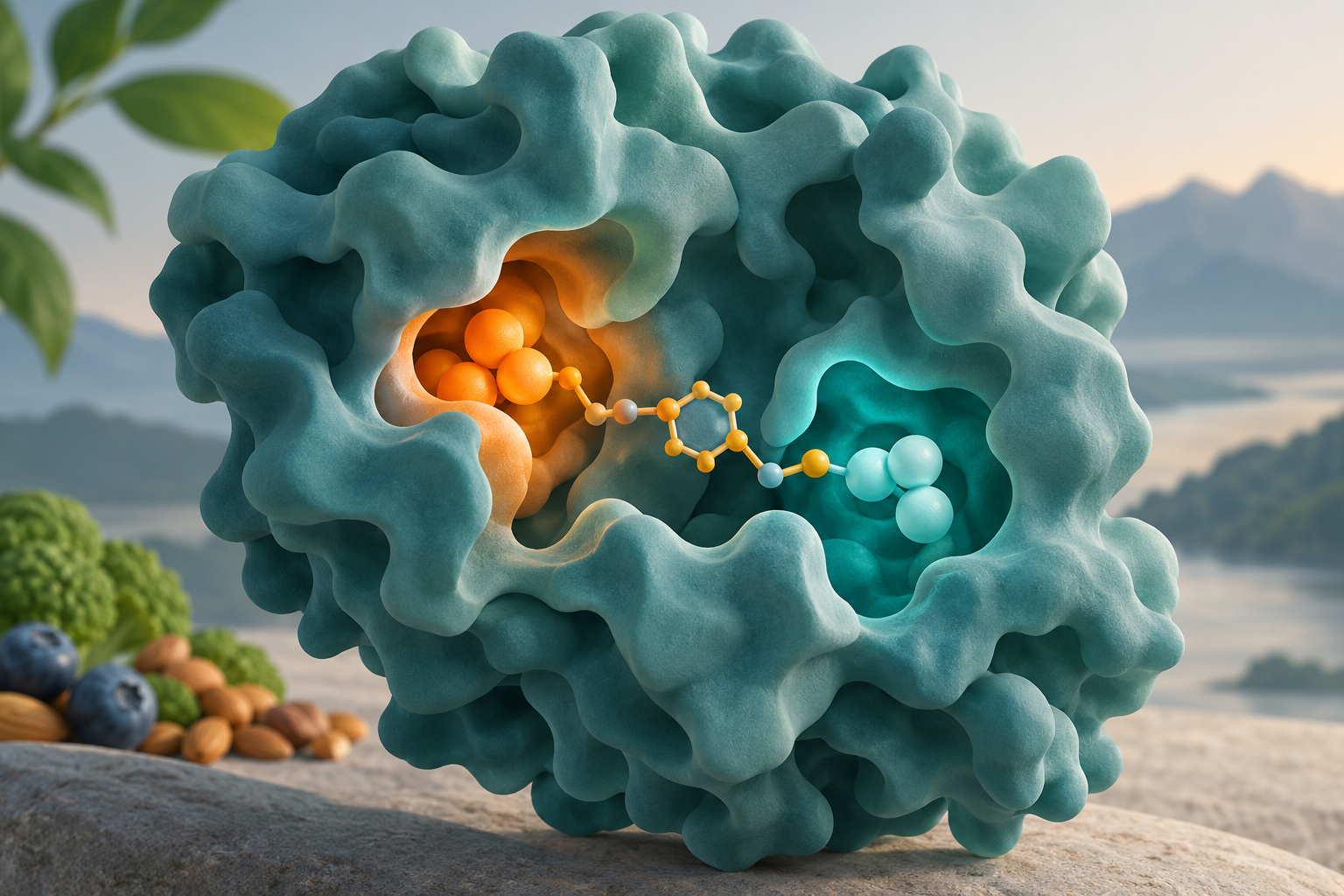
Biotin is a water-soluble B-complex vitamin, also known as B7 and vitamin H. It acts as a cofactor: a small, non-protein participant in a reaction, without which a specific enzyme cannot perform its task. In humans, biotin is necessary for five carboxylases — pyruvate carboxylase, propionyl-CoA carboxylase, methylcrotonyl-CoA carboxylase, and two forms of acetyl-CoA carboxylase. They are unified by the transfer of a carboxyl group, but each acts on its own segment of metabolism.
The word "carboxylation" denotes the attachment of a chemical group to a molecule, not a general acceleration of metabolism. In these reactions, biotin first accepts an activated group, then transfers it to another site of the enzyme. It can be imagined as a movable holder of a part between two working zones. In a structural study of Escherichia coli biotin carboxylase, the interaction of substrates and the mechanism of catalysis were examined: this is an experiment with a bacterial protein that explains the chemistry of the reaction, not a trial of a vitamin supplement in humans.
Pyruvate carboxylase converts pyruvate into oxaloacetate — a molecule necessary for a range of subsequent transformations, including the formation of glucose and the maintenance of the tricarboxylic acid cycle. It is important to note that the vitamin’s participation in such a process is not equivalent to a promise to lower blood sugar. The direction and rate of metabolism are determined not by a single ingredient, but by the state of the cell and enzyme regulation. Cryo-electron microscopy of actively working Lactococcus lactis pyruvate carboxylase revealed different positions of its domains; researchers observed a bacterial molecular machine, not an improvement in human metabolic health.
Acetyl-CoA carboxylases form malonyl-CoA, linking biotin to fatty acid metabolism. Propionyl-CoA carboxylase and methylcrotonyl-CoA carboxylase participate in the processing of other metabolic products, including amino acids. Therefore, biotin deficiency is capable of affecting several pathways simultaneously: one missing cofactor limits the work of different proteins. This explains the variety of manifestations of a severe disorder, but it does not turn biotin into a universal drug for weight loss or "energy boosting." Chapter on biotin metabolism, NCBI Bookshelf.
To incorporate the vitamin into an enzyme, the body uses holocarboxylase synthetase. It attaches biotin to a specific lysine residue in a protein: a covalent bond is formed, not a random proximity of molecules. The terms "apoenzyme" and "holoenzyme" describe the protein part without the necessary cofactor and the complete complex, respectively. Such a distinction helps in understanding why the amount of vitamin in a test tube and the actual supply of biotin to enzymes are different characteristics.
After protein degradation, bound biotin can be reused. Biotinidase releases the vitamin from biocytin and biotinylated fragments, returning it to the available pool; it also participates in the liberation of dietary biotin. The result is a cycle of attachment, work, degradation, and reuse, thanks to which the body does not start every reaction with a new portion from food. In the case of a hereditary disorder of this link, sufficient nutrition does not guarantee the availability of the vitamin for enzymes.
This system shows why a metabolic role does not dictate a cosmetic dose. From the fact that an enzyme requires biotin, one cannot deduce that an additional excess will make a hair follicle work faster. Between providing the necessary reaction and a measurable improvement in hair growth lies a separate clinical question. The answer to this must rely on studies of people with a specific condition, rather than on the appeal of a biochemical diagram.
Food, Adequate Intake, and the Difference Between μg and mg
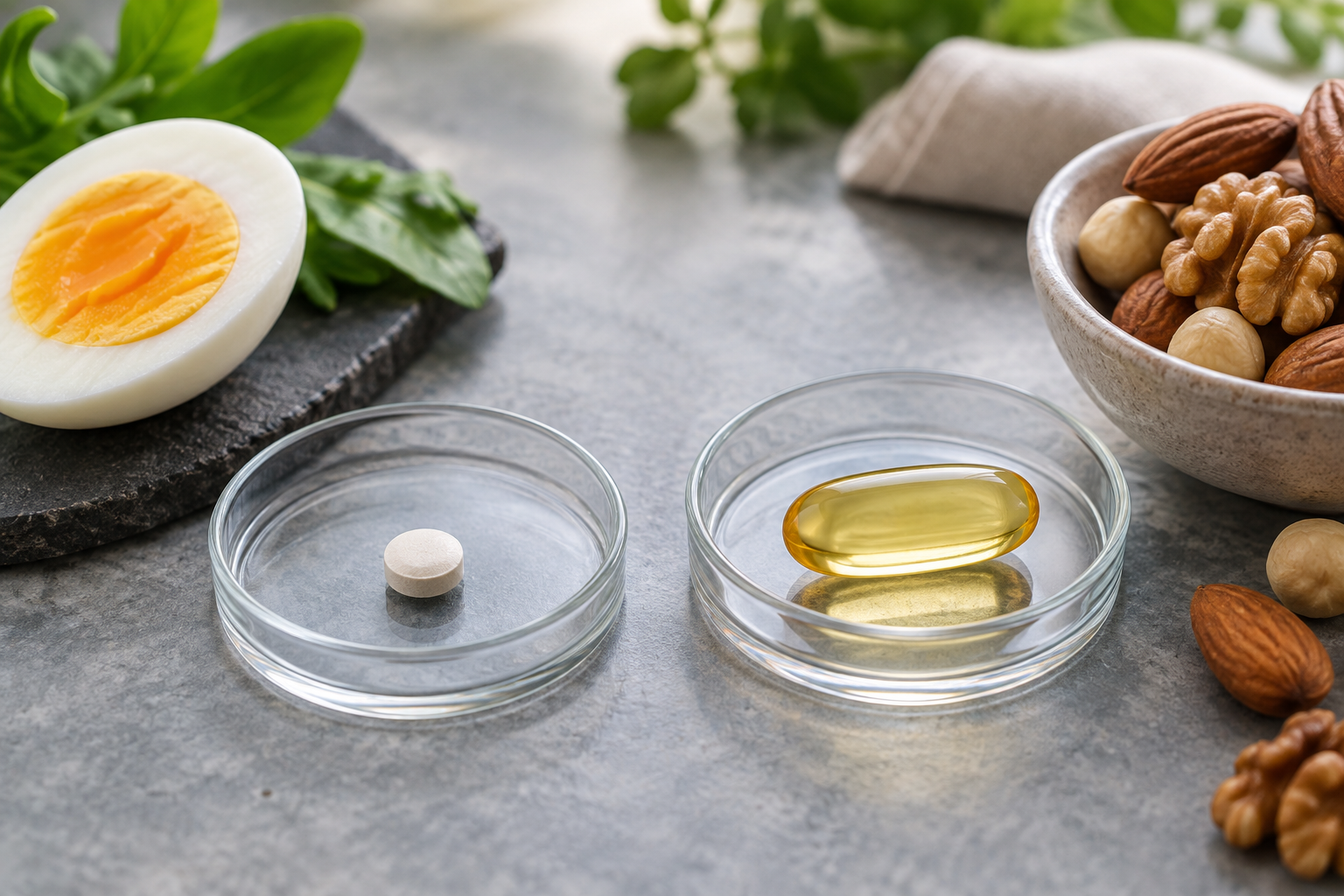
In the American system of dietary guidelines for biotin, an AI—Adequate Intake—has been established. This is a reference for a healthy population, used when data are insufficient to calculate the average requirement and the Recommended Dietary Allowance (RDA). According to the NIH ODS, the intake for adults and pregnant women is 30 μg per day, and 35 μg for lactating women. The term AI is crucial: these numbers are not therapeutic doses for hereditary diseases or proven dosages against hair loss.
The difference between regulatory systems also does not mean that one of them has discovered a new disease. The EFSA suggests an AI of 40 μg per day for adults, including pregnant women, and 45 μg during lactation, based on its own assessment of limited data. In this article, the numbers 30 and 35 μg refer specifically to the ODS, not to a universal global standard. When a requirement is estimated based on indirect evidence, the source of the number must be cited along with the number itself.
Biotin is obtained from various foods: eggs, fish, meat, nuts, and a number of vegetables. However, food tables do not turn a single plate into an accurate laboratory sample. Staggs et al. measured the biotin content in 87 foods using high-performance liquid chromatography and avidin-binding assays. This is analytical work on food composition that helps estimate a diet but does not compare the clinical efficacy of diets.
For daily nutrition, variety is more useful than searching for a single "biotin champion." Vitamin content and serving size are different values: a food with a high concentration does not necessarily provide a large share of the daily intake if it is eaten in small amounts. Furthermore, an analytical measurement of total content does not fully describe the availability of bound vitamins after digestion. The EFSA specifically notes the limited data on the absorption of biotin from bound food forms; the accuracy of a nice-looking table should not exceed the accuracy of the underlying data.
An unusual exception is associated with raw egg whites. The protein avidin strongly binds biotin and can reduce the vitamin's availability with prolonged high consumption; a regular cooked egg cannot be equated to such an experimental diet. In human studies with 28-day regimens, researchers intentionally created conditions for borderline deficiency, including with drinks containing undenatured protein. This is a model of restricted intake, not a basis for excluding eggs from a normal diet.
On a supplement label, units are more important than a large number. One milligram is equal to one thousand micrograms: 5,000 μg is 5 mg, and 10,000 μg is 10 mg. Consequently, the common cosmetic dosage in milligrams is far from the dietary reference in tens of micrograms. This simple conversion is useful to record directly in a list of medications, so that a doctor or laboratory does not mistake a milligram supplement for a standard vitamin portion.
The format of documentation also affects the conversation about safety. The label "vitamin B7" does not report a daily dose, the number of capsules, or the presence of biotin in other complexes. To understand the actual intake from supplements, data from each package and the dosing regimen are required, not just the name of a single product. It is the actual dose in laboratory interference studies that determines what specific situation is being compared.
There is no established Tolerable Upper Intake Level (UL) for biotin: the ODS attributes this to the lack of sufficient evidence of common toxicity from high doses in humans. However, the absence of a numerical ceiling does not prove the usefulness of an excess or its unconditional safety. An analytical interference can occur without stomach pain, a rash, or any other obvious side effect. Therefore, the assessment of a milligram supplement must include not only its tolerability but also its necessity.
When Deficiency Is Real and Why It Is Difficult to Recognize Through Hair

Pronounced acquired biotin deficiency is rare, especially with a standard mixed diet. Its manifestations can include hair loss, characteristic skin changes, and neurological disorders, yet each of these signs has other possible causes. Therefore, a complaint about hair on its own does not translate into a diagnosis of vitamin deficiency. First, it is necessary to understand the circumstances under which symptoms arose, as well as the diet, underlying medical conditions, and medications taken.
Hereditary biotinidase deficiency represents a different scenario. In this condition, the recycling of biotin is impaired, and several carboxylases are affected even with sufficient dietary intake. This is an autosomal recessive disorder: pathological variants affect both copies of the BTD gene, whereas carriers of one altered copy usually do not exhibit corresponding symptoms. Here, the problem lies within the vitamin recycling system, so the advice to "eat more healthy foods" does not replace specialized treatment.
Severe biotinidase deficiency is characterized by enzyme activity below 10% of the normal mean, while partial deficiency ranges from 10–30%. The diagnosis is confirmed by testing enzyme activity and, where indicated, through molecular analysis, rather than a photograph of hair. GeneReviews describes lifelong free biotin supplementation under the supervision of a specialist: for severe forms, this is typically 5–10 mg per day. This is a therapeutic regimen for an established disorder that cannot be applied to a healthy adult based on the coincidence of a number on a cosmetic package.
It is especially significant to identify the disease before symptoms appear. Observations of children diagnosed through screening and receiving treatment form the basis of early intervention practice; these are clinical data on a rare disease, not a cosmetic RCT. Some already manifested impairments of hearing, vision, and development may remain incompletely reversible. Therefore, the efficacy of early treatment should not be described as a promise of complete tissue recovery after the initiation of vitamin therapy.
Borderline deficiency is studied differently: through enzyme activity or status and metabolic products. In an experiment by Eng et al., 16 healthy adults underwent biotin depletion, sufficiency, and supplementation regimens; twenty potential indicators were evaluated. The content of biotinylated MCC and PCC in lymphocytes proved most effective at distinguishing between deficiency and sufficiency. The study demonstrates a physiological principle but does not establish a mandatory set of tests for every person with hair loss.
Even a marker with a plausible mechanism can miss some cases. In the same study, 3-hydroxyisovaleric acid excretion identified some participants with deficiency but yielded a significant number of false negatives. Changes in gene expression also failed to reproduce the simple picture seen in cellular models. This is a useful example of the difference between in vitro experimentation and human physiology: the reaction of laboratory cells does not yet make a marker reliable in humans.
Pregnancy adds another nuance: a changed metabolic indicator is not equivalent to proven clinical harm. Mock et al. included 26 pregnant women with elevated 3-hydroxyisovaleric acid excretion in a randomized, placebo-controlled trial. After 300 µg of biotin daily for 14 days, the marker decreased; in early pregnancy, the mean decrease was 11.7 mmol/mol creatinine versus an increase of 1.6 in the placebo group. The outcome was urine biochemistry, not the incidence of congenital anomalies or improvements in child health.
In this situation, it is important to maintain both conclusions simultaneously. The study supports the hypothesis of altered biotin status in a portion of pregnant women but does not prove the necessity of milligram-level supplements for all women. Data on developmental disorders in animal models of deficiency also do not replace human studies of clinical outcomes. For a specific pregnancy, one discusses nutrition and the composition of prescribed prenatal vitamins rather than making a universal prescription based on an individual metabolic experiment.
Hair and nails: what studies actually measured

The popularity of biotin is based on a logical causal chain: a deficiency can be accompanied by hair loss, therefore correcting it may help. The error arises at the next step, when correcting a diagnosed deficiency is conflated with boosting growth when levels are normal. These are different interventions in different populations, and the latter requires separate evidence. The American Academy of Dermatology emphasizes the rarity of deficiency and the limited basis for taking biotin for hair.
A description of an individual patient is useful if it helps to recognize an unusual disease or to notice a possible response to treatment. However, a case report lacks a randomized control group and does not show what would have happened without the supplement. Nutrition, primary treatment, and the natural course of the condition can all change simultaneously. Therefore, even compelling hair regrowth in a rare biotin-dependent disorder cannot be declared the effect size for people with ordinary hair loss.
To prove a cosmetic effect, it is necessary to pre-define what constitutes success. Hair count per standard area, objective assessment of density, and the patient's subjective impression measure different aspects of the outcome. Comparable groups, sufficiently long follow-up, and separate accounting for baseline vitamin status are required. Without such a design, "before and after" photographs do not distinguish the effect of biotin from lighting, styling, and natural fluctuations; this is a limitation of the observation method, not a devaluation of the complaint itself.
Data on brittle nails are somewhat more specific but remain limited. Colombo and co-authors studied nail samples from 32 people, including ten participants with normal nails and 22 patients with brittle ones. In a group of eight patients with samples taken before and after biotin intake, nail plate thickness increased by 25%. This is a measurement by scanning electron microscopy, not the result of a large randomized, placebo-controlled trial.
Patients received 2.5 mg per day orally; monitoring and sample collection spanned several months, with treatment descriptions lasting up to 6–15 months. For the other 14 patients, the timing of nail clippings did not coincide precisely with the start and end of intake, which complicates comparison. Control samples of normal nails do not replace a group of patients with the same brittleness receiving a placebo. The percentage increase in thickness cannot be translated into "25% less hair loss" or a probability of success for a supplement buyer.
Such small, uncontrolled observations provide a basis for further research on nails but do not define a universal dose and duration of treatment. The nail plate and the hair follicle are also not interchangeable clinical outcomes. Even if an instrumental nail metric has changed, this does not answer the question about hair density. Therefore, the phrase "for hair, skin, and nails" combines marketing goals more broadly than actual research allows.
In the case of hair loss, the practical route begins with determining its type and cause. A dermatologist evaluates the history, scalp, and pattern of hair loss; laboratory tests are ordered when a disease, deficiency, or hormonal imbalance is suspected. This allows for choosing help based on the established problem rather than the name of a vitamin. The mere possibility of a deficiency does not mean that everyone needs the same vitamin panel or the same supplement.
If biotin deficiency is not confirmed, its clinical efficacy for hair growth is unproven. This is not a statement that improvement is impossible for any individual, but an assessment of what can be promised in advance. Compelling prescription requires a cause, a reproducible effect, and a reasonable balance of benefit to risk. In the case of milligram-dose biotin, a very concrete risk of erroneous test results is added to the uncertain cosmetic benefit.
Why the vitamin interferes with laboratory measurements

Laboratories determine many hormones and proteins using immunological methods. An antibody recognizes the target molecule, and the measuring system converts this binding into a signal. In some tests, the extremely strong "biotin-streptavidin" pair is used to anchor the complex. Free biotin from the patient's sample can occupy available binding sites and interfere with the capture of the required complex, even though the concentration of the substance being tested has not changed.
In a typical sandwich method, the analyte is positioned between two antibodies. The more of these complexes that are captured, the stronger the signal and the higher the calculated concentration. If an excess of biotin interferes with this capture, the signal becomes weaker, and the result may be falsely low. This explanation applies to the sensitive design of the test, rather than to all assays for the substance named on the requisition form.
In a competitive format, the logic of the measurement is usually reversed: the patient's own molecule competes with the reagent, and the signal decreases as the amount of the analyte increases. The loss of signal due to extraneous biotin can be interpreted as an excess of the analyte. Therefore, in sensitive competitive tests, the result often turns out to be falsely elevated. The terms "sandwich" and "competitive" help to predict the direction of the error, but they do not negate the need to know the specific reagent and its sensitivity.
This is particularly evident in thyroid examinations. The combination of a falsely low thyroid-stimulating hormone with falsely elevated thyroid hormones can mimic hyperthyroidism, even though it is an analytical interference. Furthermore, not every component of a panel is required to change in the same way or to change at all. NICE recommends inquiring about biotin intake in adults and children with suspected thyroid dysfunction so as not to base treatment on a flawed laboratory picture.
The safety of a test cannot be deduced solely from the name of the manufacturer or the class of the indicator. In primary experiments, distortions of individual tests differed even within biotinylated systems, and reagent designs can be updated. A study on pre-binding antibodies to a streptavidin surface investigated a method to reduce interference in manual and automated immunoassays. This is a laboratory intervention in the method, which helps to understand the role of the test design, rather than a recommendation for a patient to process a sample on their own.
Troponin requires special attention due to the potential cost of an underestimated result. The FDA continues to issue warnings regarding sensitive tests, while simultaneously noting that some developers have already reduced the interference of their methods. This means that the story regarding the risk is real, but the list of legacy platforms should not become an eternal list of "dangerous laboratories." Actual sensitivity is determined by the specific assay and current manufacturer documentation.
A 2019 troponin study used samples from five healthy volunteers after 10 mg of biotin daily for five days and laboratory mixing with plasma containing elevated troponin. Significant interference was found in the Gen 5 cTnT examined, whereas the compared Gen 4 cTnT and high-sensitivity cTnI did not show it. This is a combination of human intake and an in vitro experiment, not an observation of the frequency of missed myocardial infarctions. It demonstrates differences in methods and does not authorize declaring any troponin assay unsuitable.
What experiments with 5–10 mg in humans showed

In 2017, Li and colleagues studied six healthy adults who took 10 mg of biotin per day for seven days. 37 immunoassays were used for eleven indicators, comparing results before intake, during it, and after completion. Interference was found in nine of the 23 biotinylated tests and in none of the fourteen non-biotinylated ones. This is a small, non-randomized experiment on measurement accuracy, not a clinical trial of a treatment or an assessment of the prevalence of interference in all laboratories.
The result is useful due to its heterogeneity. In the same experiment, a portion of the methods using biotin remained without detectable interference under the chosen regimen, meaning the technology itself does not dictate a uniform magnitude of error. The proportion of sensitive tests pertains to the studied set and the conditions of blood collection. It cannot be read as the probability that any patient taking biotin will have an incorrect diagnosis; the study compared measurement procedures, not such clinical outcomes.
In 2020, Zhang et al. studied ten healthy adults after seven-day courses of 5 and 10 mg daily. Thyroid markers were measured before intake and at various intervals after the final dose using Roche cobas e602, Beckman UniCel DxI 800, and Abbott Architect 2000 systems. The Roche and Beckman assays tested showed increases or decreases, while no interference was detected on the selected Abbott tests. These names describe the experimental systems of that time and do not guarantee the performance of any modern reagent of the same brand.
After 5 mg daily, the authors considered eight hours sufficient to eliminate the detected interference in the studied thyroid tests. After 10 mg, the return of results to baseline required approximately one day for Roche and two days for Beckman. Here, both the dose and the platform are significant, as is the fact that the study involved a small group of healthy people. One cannot derive a universal timeframe for a patient with impaired renal function or for another highly sensitive assay from such a result.
An additional human experiment was conducted by Ylli et al.: thirteen adults received 10 mg of biotin daily for eight days. The authors compared Roche Cobas 6000, Abbott Architect, and liquid chromatography-tandem mass spectrometry methods, while thyroglobulin was measured on a Siemens IMMULITE 2000. The maximum interference among the studied time points was observed two hours post-dose. This shows that the time of the last intake is important even with a constant daily dosage.
In the Roche measurement after a single dose on the first day, TSH was on average 34% lower after two hours and 20% lower after five hours. On the eighth day, the decrease at these points was 26% and 21% respectively relative to the baseline; for thyroglobulin, a false decrease was identified on the Siemens system. These are magnitudes of shift in a specific experiment, not a reduction in hormone secretion or tumor mass. For follow-up after thyroid cancer, such a difference is particularly significant: an erroneously low marker can alter the interpretation of a patient's condition.
The pharmacokinetic study by Grimsey with doses of 5, 10, and 20 mg in healthy participants addressed another part of the task—the change in biotin concentration over time. A population model allowed for the calculation of clearance times below various analytical thresholds. However, a 10 ng/mL threshold and a 100 ng/mL threshold imply different requirements for the same sample. Therefore, the elimination period of the vitamin cannot be separated from the concentration level that a specific laboratory method can tolerate.
Together, these works provide a substantially more accurate conclusion than the formula "biotin ruins lab tests." Interference depends on the dose-time profile and the measurement device, and its clinical relevance depends on the magnitude of the shift and the purpose of the examination. One result may remain within the reference interval, while another may cross a diagnostic threshold; the same direction of error does not make the consequences identical. Data from healthy volunteers demonstrate the possibility of interference but do not replace the laboratory's judgment regarding a specific sample.
Safe intake and examination without dangerous delays

Before a scheduled examination, it is useful to prepare a short but accurate list of supplements. It should include the product name, the amount of biotin per serving, the number of servings per day, and the time of the last dose. A photograph of the label is helpful if the package contains multiple vitamin components or if units are recorded in an unconventional way. Such a list provides the laboratory with measurable facts; the phrase "I take something for my hair" leaves the most important detail—the actual dose—unknown.
There is no universal "washout" period, i.e., time of discontinuation before testing, for all situations. The AACC suggests a minimum pause of eight hours after 5–10 mg for certain conditions, but explicitly notes that sensitive methods may require longer intervals. These guidelines are intended for solving a laboratory challenge, not for a patient to choose a single timeframe on their own. The practical interval should be coordinated with the laboratory and the attending physician based on the method, dose, renal function, and urgency of the examination.
The figure of 72 hours sometimes appears in professional guidelines, but it does not mandate a three-day withdrawal for every individual. Specific provisions apply to more sensitive tests or high therapeutic doses, and reduced renal excretion can prolong the presence of biotin. A medication prescribed for a hereditary disorder should also not be discontinued without consultation: stopping treatment itself can be dangerous. In such a situation, the laboratory and the specialist determine how to obtain a reliable result while maintaining the necessary therapy.
If a suspicious result has already been obtained, it is useful to reconstruct the examination conditions prior to changing the treatment. The physician correlates the laboratory picture with symptoms and history, while the laboratory determines whether a sensitive method was used. A possible solution becomes measurement via a suitable alternative method or a new sample after an agreed-upon pause. Independent dilution of blood or "correcting" the number based on a percentage found in an article is impossible: the magnitude of interference is not universal.
In the event of pain or pressure in the chest, shortness of breath, cold sweat, or other signs of a possible heart attack, help must not be delayed for the sake of biotin withdrawal. One should contact emergency services via the local number and immediately report the supplement, its dose, and the last time it was taken. The waiting time for a "clean analysis" must not replace the examination and treatment of an acute condition. The American Heart Association emphasizes the need for immediate action even when one is unsure of the cause of symptoms.
Reporting biotin does not mean the patient should refuse a troponin test. It provides the medical team with important information for choosing the method and interpretation, especially if the result is inconsistent with the clinical picture. A falsely low value from a sensitive test can create a false sense of reassurance, but the supplement itself does not explain chest pain. Therefore, disclosing its intake should complement emergency care, not become a reason to postpone it.
In daily practice, the most useful question concerns the purpose of the prescription. In a confirmed biotin-dependent disorder, the vitamin has a specific therapeutic objective, whereas cosmetic use in the absence of a deficiency rests on much less convincing grounds. The absence of discomfort does not indicate that there is no laboratory risk, and increasing the dose does not resolve the uncertainty of efficacy. Therefore, the decision to continue the supplement should be tied to a diagnosis and an expected outcome, rather than to a promise of thicker hair on a label.
It is useful to perceive biotin simultaneously as a necessary nutrient, a medication for specific disorders, and a potential analytical interference. These roles do not contradict each other: everything depends on the reason for intake, the quantity, and the examination situation. For the average user, this means a reasonable diet and accurate information about supplements; for the specialist—caution when translating a molecular mechanism into a clinical promise. The best solution here emerges when the vitamin dose, laboratory method, and the patient's actual task are considered together.
FAQ
Will biotin help with hair loss if a deficiency is not confirmed?
Clinical efficacy in such situations is not proven. Hair loss requires identifying the type and cause; individual observations after taking the vitamin do not provide a reliable prognosis. Supplemental doses should be discussed based on a diagnosed condition, not cosmetic promises. [AAD](https://www.aad.org/public/diseases/hair-loss/treatment/diagnosis-treat).
What is the daily requirement, and what is the difference between mcg and mg?
According to the NIH ODS, the AI is 30 mcg for adults and pregnant women, and 35 mcg during lactation. One mg equals 1000 mcg, so 5000 mcg is 5 mg. Dietary adequacy and therapeutic or cosmetic doses serve different purposes. [NIH ODS](https://ods.od.nih.gov/factsheets/Biotin-HealthProfessional/).
Why is biotinidase checked separately from biotin levels?
Biotinidase releases bound vitamin and supports its recycling. Hereditary deficiency is confirmed by enzyme activity and, if necessary, genetic testing. This is a distinct disease that cannot be diagnosed by brittle nails or hair loss. [GeneReviews](https://www.ncbi.nlm.nih.gov/books/NBK1322/).
Does biotin always lower TSH and raise all other parameters?
No: the result depends on the specific test device. Sensitive sandwich-style methods often show false decreases, while competitive methods may show false increases; some methods show no interference. The name of the test does not replace information about the specific reagent and platform. [Li Study](https://jamanetwork.com/journals/jama/fullarticle/2654822).
How many hours before a test should the supplement be stopped?
There is no universal pause, and 72 hours is not a mandatory requirement for all. The laboratory and attending specialist account for the method, actual dose, kidney function, and urgency. Biotin prescribed for a hereditary disorder should not be stopped independently. [AACC Recommendations](https://academic.oup.com/jalm/article/5/3/575/5700349).
Should one wait to stop biotin if chest pain occurs?
No: if there are signs of a possible heart attack, contact emergency services immediately without waiting. Inform the medical team about the biotin, dose, and last intake so they can account for potential interference in sensitive troponin assays. [AHA](https://www.heart.org/en/health-topics/heart-attack/warning-signs-of-a-heart-attack), [FDA](https://www.fda.gov/medical-devices/in-vitro-diagnostics/biotin-interference-troponin-lab-tests-assays-subject-biotin-interference).
Sources
- NIH Office of Dietary Supplements. Biotin: Fact Sheet for Health Professionals
- EFSA NDA Panel. Scientific Opinion on Dietary Reference Values for biotin. EFSA Journal. 2014;12(2):3580
- Crystal Structure of Biotin Carboxylase in Complex with Substrates and Implications for Its Catalytic Mechanism. 2009
- CryoEM structural exploration of catalytically active enzyme pyruvate carboxylase. Nature Communications. 2022
- Biotin Metabolism. Basic Neurochemistry. NCBI Bookshelf
- Wolf B. Biotinidase Deficiency. GeneReviews. Updated February 19, 2026
- MedlinePlus Genetics. Biotinidase deficiency
- Staggs CG et al. Determination of the biotin content of select foods using accurate and sensitive HPLC/avidin binding. Journal of Food Composition and Analysis. 2004;17(6):767–776
- Stratton SL et al. Marginal Biotin Deficiency Can Be Induced Experimentally in Humans Using a Cost-Effective Outpatient Design. Journal of Nutrition. 2012;142(1):22–26
- Eng WK et al. Identification and assessment of markers of biotin status in healthy adults. British Journal of Nutrition. 2013;110(2):321–329
- Mock DM, Quirk JG, Mock NI. Marginal biotin deficiency during normal pregnancy. American Journal of Clinical Nutrition. 2002;75(2):295–299
- Colombo VE, Gerber F, Bronhofer M, Floersheim GL. Treatment of brittle fingernails and onychoschizia with biotin: scanning electron microscopy. Journal of the American Academy of Dermatology. 1990;23(6 Pt 1):1127–1132
- American Academy of Dermatology. Supplement secrets unveiled: debunking common myths about beauty boosters
- American Academy of Dermatology. Hair loss: Diagnosis and treatment
- Li D et al. Association of Biotin Ingestion With Performance of Hormone and Nonhormone Assays in Healthy Adults. JAMA. 2017;318(12):1150–1160
- Zhang Y et al. Assessment of biotin interference in thyroid function tests. Medicine. 2020;99(9):e19232
- Ylli D et al. Biotin Interference in Assays for Thyroid Hormones, Thyrotropin and Thyroglobulin. Thyroid. 2021;31(8):1160–1170
- Grimsey P et al. Population Pharmacokinetics of Exogenous Biotin and the Relationship Between Biotin Serum Levels and In Vitro Immunoassay Interference. International Journal of Pharmacokinetics. 2017;2(4):247–256
- Susceptibility of Cardiac Troponin Assays to Biotin Interference. American Journal of Clinical Pathology. 2019;151(5):486–493
- Mitigation of Biotin Interference in Manual and Automated Immunoassays by Preconjugating Biotinylated Antibodies to the Streptavidin Surface as an Alternative to Biotin Depletion. Journal of Applied Laboratory Medicine. 2022;7(3):762
- Li D, Ferguson A, Cervinski MA, Lynch KL, Kyle PB. AACC Guidance Document on Biotin Interference in Laboratory Tests. Journal of Applied Laboratory Medicine. 2020;5(3):575–587
- FDA. Biotin Interference with Troponin Lab Tests — Assays Subject to Biotin Interference
- NICE. Thyroid disease: assessment and management. NG145. Recommendation 1.2.11: biotin intake and thyroid function tests
- American Heart Association. Warning Signs of a Heart Attack